![[SG EATS] Song Yue Taiwan Cuisine – Taiwanese Restaurant at Leisure Park Kallang](https://hazeldiary.com/wp-content/uploads/2024/03/Song-Yue-Crispy-Eggs-with-Black-Sesame-Oil-672x372.jpg "[SG EATS] Song Yue Taiwan Cuisine – Taiwanese Restaurant at Leisure Park Kallang")
Exploring Taiwanese cuisine in Singapore often leads to encounters with familiar street food offerings, but Song Yue Taiwan Cuisine at Leisure Park Kallang stands out by presenting a menu that delves into authentic home-style Taiwanese dishes. Unlike its counterparts, this restaurant takes a departure from the typical street fare, offering a delightful array of home-style Taiwanese dishes that go beyond the usual oyster mee sua and fried chicken cutlet.
Read more: [SG EATS] Song Yue Taiwan Cuisine – Taiwanese Restaurant at Leisure Park KallangSong Yue’s menu is a celebration of produce-driven Taiwanese cuisine inspired by the countryside, providing a dining experience rarely found in the city. Noteworthy is their exceptional beverage selection, featuring Taiwanese teas sourced directly from small family tea farms across the island, expertly brewed by an in-house certified tea specialist.

Starting with the Taiwanese-style home-pickled chilled dishes, including Pickled Cherry Tomatoes with Sour Plums and crunchy Pickled Cabbage and Radish. The appetizers were a refreshing introduction to the meal.

The Traditional Ginger Duck ( S$19.90++ | S$36.90++) , a Taiwan-famous dish, showcased uber-tender duck chunks with thick ginger pieces and black sesame oil. Comforting and flavorful experience. So good that I had two bowls of the soup.

Crispy You-Tiao Pineapple Prawns (S$18.90++) showcase prawns coated in a crunchy batter, stir-fried with pineapples, and drizzled with a delicate citrusy mayonnaise dressing. Song Yue’s version elevates the dish by incorporating handmade dough fritters filled with a meticulously blended mixture of squid and prawn paste, providing an extra layer of both texture and flavor.

The Salt and Pepper Pomfret with Crispy Garlic Chips ( S$35.90++) , a twist on the classic salt and pepper chicken. We were impressed with its well-executed crispy batter and delightful seasoning, especially the crunchy garlic chips all over the fish.

A standout on the menu is the Farm Chicken with Spring Onion (S$18.90++| S$33.90++) , featuring tender and flavorful chicken topped with a generous amount of fresh spring onion. I was pleasantly surprised by the tenderness and flavorful taste of the chicken, which uses local kampong chicken. The dish is generously topped with fresh spring onions, enhancing the overall chicken flavor. I recommend ordering this to share for big group gatherings.

Priced at S$18.90, the Slow-Braised Pork Ribs with White Radish stands out with the pronounced presence of the white radish. While the prime ribs offer a flavor profile in line with expectations, it is the white radish that truly absorbs the rich essence of the soy-based sauce, enhanced with a medley of herbs.

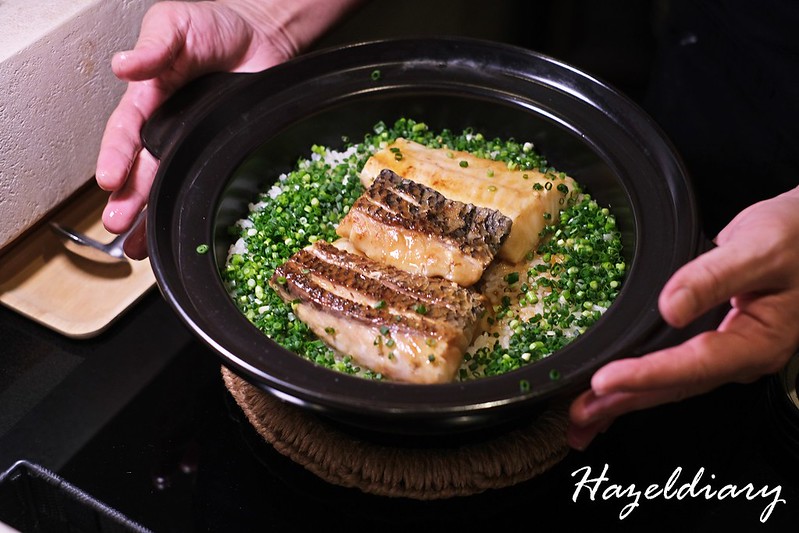
For those seeking a more indulgent option, the Cabbage and Hokkaido Scallop Stone Pot Rice (S$19.90++| S$32.90++) presented a flavorful combination of charred rice, sweet cabbage, and plump scallops. This rice dish features Grade 1 short-grained rice harvested in ‘Tai Chung’ and is served in a piping hot stone pot, imparting a delightful smoky flavor to the rice. The seared Hokkaido scallops add a luxurious touch, and portions of the rice being crispy and crusty gives an extra texture.

The Silken Tofu with Pumpkin and Crabmeat ( S$18.90++), featuring sweet golden pumpkin from Taiwan. This dish provides a lighter option, though a bit more crabmeat would have enhanced the dish.

The Crispy Eggs with Black Sesame Oil (S$16.90++), a Taiwanese household favorite, featured four fried sunny-side-ups cooked in a sweet-savory sauce with Taiwan-imported black sesame oil. Delightful combination of runny yolks and crispy sides in a sweet-savory sauce, though some might find the price a bit steep.

Another noteworthy dish is Ah Ma’s Rice Vermicelli and Taro Soup (S$19.90++/ S$32.90++ ). This dish features fine rice vermicelli from Xin Zhu, immersed in a flavorful pork bone broth. The soup is complemented by sliced pork belly, lala, shiitake mushrooms, and sweet taro chunks. To my delight, the rice noodles maintained a pleasing firmness despite being immersed in the piping-hot soup – a welcome surprise for someone who dislikes soggy noodles. The full-bodied broth struck a perfect balance, not overly salty, allowing me to savor every bit of it with a satisfying slurp.
The restaurant’s ambiance accommodates up to 120 diners, with open and spacious seating, including private dining rooms for more intimate gatherings. While the middle seats lack some intimacy, the booth seats on the side provide a cozier atmosphere. Located conveniently at Leisure Park Kallang, a short walk from Stadium MRT Station, Song Yue Taiwan Cuisine offers a homely and well-executed dining experience with reasonable prices – making it a worthy choice for a family meal.
Address: Song Yue Taiwan Cuisine
5 Stadium Walk
#01-38/39 Leisure Park Kallang Singapore 397693
Opening hours: Sunday-Thursday 11:30am to 3:30pm | 5:00PM to 9:00PM
Tel: 6988 3322
![[TRAVEL GUIDE] 5 Money-Saving Tips for Budget-Conscious Travelers to Taiwan](https://hazeldiary.com/wp-content/uploads/2022/11/Elephant-Mountain-Taipei-Taiwan-672x372.jpg "[TRAVEL GUIDE] 5 Money-Saving Tips for Budget-Conscious Travelers to Taiwan")


![[SG EATS] Araya At Mondrian Singapore Duxton | South American Fine-Dining Cuisine With Chilean Focus](https://hazeldiary.com/wp-content/uploads/2024/02/Araya-South-American-Fine-Dining-Moqueca-a-traditional-Brazilian-fish-stew-672x372.jpg "[SG EATS] Araya At Mondrian Singapore Duxton | South American Fine-Dining Cuisine With Chilean Focus")





![[SG EATS] Abura Kappo at Amoy Street | A Novel Restaurant-in-a-Restaurant Concept within Hashida Singapore](https://hazeldiary.com/wp-content/uploads/2024/02/Abura-Kappo-Amoy-Street-672x372.jpg "[SG EATS] Abura Kappo at Amoy Street | A Novel Restaurant-in-a-Restaurant Concept within Hashida Singapore")









![[SG EATS] Experience Colonial Elegance with Fine Cantonese Dining at Chef Chan’s Private Dine, Led by Resident Chef Wong Hong Loong at 35 Scotts Road](https://hazeldiary.com/wp-content/uploads/2024/01/Chef-Chans-Private-Dining-Abalone-with-Caviar-and-Maitake-Mushroom-“Kung-Fu”-Soup-672x372.jpg "[SG EATS] Experience Colonial Elegance with Fine Cantonese Dining at Chef Chan’s Private Dine, Led by Resident Chef Wong Hong Loong at 35 Scotts Road")
![[SG EATS] Yì by Jereme Leung at Raffles Hotel Singapore Presents a Feast for the Year of the Dragon](https://hazeldiary.com/wp-content/uploads/2024/01/Yi-by-Jereme-Leung-Longevity-Yu-Sheng-672x372.jpg "[SG EATS] Yì by Jereme Leung at Raffles Hotel Singapore Presents a Feast for the Year of the Dragon")
![[SG EATS] Bountiful Reunions 2024 at Hai Tien Lo | Pan Pacific Singapore](https://hazeldiary.com/wp-content/uploads/2024/01/Hai-Tien-Lo-Pan-Pacific-Singapore-Double-Dragon-Blessing-Premium-Treasure-Pot-672x372.jpg "[SG EATS] Bountiful Reunions 2024 at Hai Tien Lo | Pan Pacific Singapore")